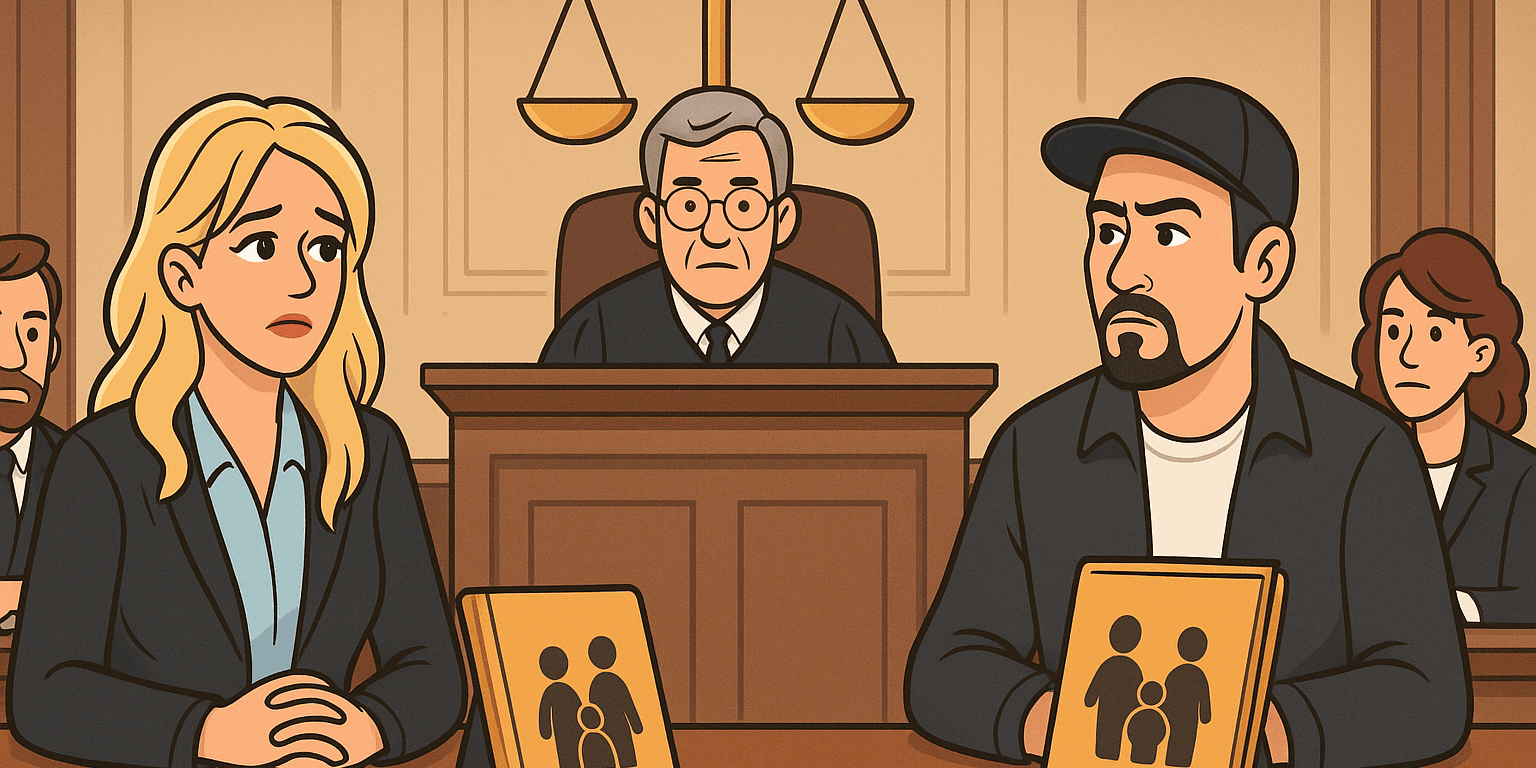
What We Learned from the Spears–Federline Case About How Mental Health Affects Child Custody Decisions in Nevada
The custody battle between pop icon Britney Spears and her ex-husband Kevin Federline is a widely recognized example of how a parent’s mental health can influence child custody outcomes. In their very public case, media reporting focused heavily on Spears’ mental health and how it affected their two sons. This case study offers a practical framework for examining how Nevada courts treat mental health in custody matters. Below, we explain Nevada’s child custody law—especially the “best interest of the child” standard—and how courts analyze mental health in both statutes and case law.
If you have questions about your own situation, our
Nevada child custody lawyers
can walk you through how judges evaluate these factors and what evidence is most persuasive.
Britney Spears and Kevin Federline: Mental Health and Child Custody
The custody dispute between Britney Spears and Kevin Federline in the late 2000s shows how mental health concerns can affect physical custody and visitation. The couple married in 2004 and later had two sons. By 2007, the marriage had ended amid concerns about Spears’ mental health. In early 2008, after a high-profile incident at Spears’ Los Angeles home, reports documented a rapid court response: visitation was suspended and Federline was granted temporary sole custody (see reporting such as:
ABC News timeline,
and a
CNN transcript (Jan. 4, 2008) discussing the emergency order).
News roundups at the time likewise summarized that Spears was placed on an involuntary psychiatric hold and that custody transferred to Federline pending stabilization
(Associated Press aggregation).
In subsequent years, as Spears regained stability under a court-ordered conservatorship, she resumed supervised visits and custody schedules were adjusted. By 2019, coverage indicated a shift to a 70/30 physical custody split favoring Federline after a separate household incident involving a family member
(E! News;
Yahoo Entertainment).
Even after the conservatorship ended in November 2021, reports in 2022 suggested the boys were spending limited time with their mother. In a televised interview, Federline said the teenagers had “decided they are not seeing her right now,” and they did not attend her wedding
(Business Insider/CBS summary;
The Independent coverage;
iHeart recap).
He also criticized some of Spears’ social media behavior, a thread seen across 2022 coverage
(Newsweek).
Ahead of a planned memoir release in October 2025, Federline reportedly expressed new concerns, telling The New York Times (as summarized by
PEOPLE) that he feared the situation was
“racing toward something irreversible” and that “it’s become impossible to pretend everything’s OK.” Additional reporting highlighted an allegation that Spears stood in her sons’ room holding a knife while they slept
(PEOPLE follow-up;
see also a New York Post summary).
Spears has pushed back on aspects of these public statements, calling them “hurtful,” and her then-husband publicly criticized the interviews
(The Independent).
This highly public saga underscores how allegations of mental instability can shape custody arrangements—yet it unfolded under California law. So how might a similar set of facts be analyzed under Nevada law? If you’re evaluating next steps in Nevada, you can
schedule a consultation
for tailored guidance.
Nevada’s “Best Interest of the Child” Standard
Nevada applies the same foundational principle as most states: the best interest of the child controls all custody decisions. The rule is codified at
NRS 125C.0035,
which lists the factors a judge must consider and weigh, including “the mental and physical health of the parents.”
You can also review the statute on the
Nevada Legislature’s website.
No single factor is dispositive, and Nevada does not favor one parent over the other based on gender. Courts look at the totality of circumstances—parent–child relationships, cooperation, history of abuse or domestic violence, and the stability of each household among other things—to determine what arrangement is in the child’s best interest. Nevada public policy generally favors substantial, meaningful contact with both parents when safe and practical. For personalized strategy on these factors, see our
Nevada family law overview.
How Mental Health Is Evaluated in Nevada Custody Cases
Mental health is one factor among many, but it can be pivotal when severe symptoms or instability affect the child’s safety or emotional well-being. A diagnosed condition alone does not automatically disqualify a parent from custody. Judges focus on the impact:
Does the condition impede a parent’s ability to provide safe, stable, and consistent care?
- Evidence can include medical records, therapist reports, expert testimony, police reports, and witness statements.
- Evaluations: Courts may order psychological or child custody evaluations when necessary. See child welfare context from Nevada DCFS:
Nevada DCFS – CPS overview. - Protective conditions such as supervised visitation, therapy compliance, or parenting classes may be implemented when safety issues arise.
- Modification: Custody/visitation orders can be modified if a parent’s mental health materially improves or deteriorates.
If you believe a mental health issue may be raised in your case, we can help you prepare evidence and address it proactively. Start here:
Child Custody at Gastelum Attorneys.
Nevada Case Law: Practical Takeaways
Nevada appellate decisions reinforce two core themes: (1) courts act to protect children when a parent’s mental or emotional instability causes harm or serious risk; and (2) courts aim to preserve the parent–child relationship when safety can be maintained through less restrictive measures (e.g., supervised time, treatment conditions) rather than cutting off contact entirely. Judges must ground decisions in the best-interest factors, making findings that explain why restrictions—if any—are necessary and why less restrictive alternatives would or would not suffice. See the best-interest framework at
NRS 125C.0035.
The Spears–Federline timeline—an acute crisis followed by structured rebuilding and periodic adjustments—mirrors how Nevada courts can tighten or relax custody terms based on current safety, stability, and documented progress.
To discuss modifications, enforcement, or strategic safeguards in your matter, contact our team:
Request a consultation.
Key Nevada Legal Standards on Mental Health & Custody
- Best Interests (NRS 125C.0035): Court must consider the mental and physical health of the parents, the child’s needs, history of violence/abuse, stability, and other listed factors
(statute text |
legislature site). - No automatic disqualification: A diagnosis by itself isn’t determinative; courts look at whether the condition affects parenting capacity and child safety.
- Evidence & evaluations: Judges may rely on treatment records, expert reports, and custody/psychological evaluations; the process should be impartial and child-focused
(Nevada DCFS – CPS). - Least restrictive safeguards: Supervision, therapy compliance, or structured schedules are preferred over total denial unless a parent is truly unfit or dangerous.
- Modification over time: Orders remain modifiable; improvement or relapse can warrant revisiting custody to realign with the child’s best interests.
For a deeper dive into how these principles apply to your facts, explore our
family law blog
or our
Nevada family law hub.
FAQ: Mental Health and Child Custody in Nevada
What does “best interest of the child” mean in Nevada?
It’s the governing legal standard. Courts weigh factors listed in
NRS 125C.0035,
including each parent’s mental and physical health, safety, stability, and the quality of relationships, to determine the arrangement that best serves the child.
Does a mental health diagnosis automatically prevent custody?
No. Nevada courts focus on the impact of the condition on parenting. Manageable, well-treated conditions may have little effect on custody; uncontrolled symptoms that endanger a child can lead to restrictions.
How do courts evaluate mental health claims?
With evidence. Medical and therapy records, expert testimony, incident reports, and sometimes court-ordered psychological or custody evaluations are used to assess parenting capacity and risk.
What safeguards might the court order?
Supervised visitation, therapy or medication compliance, parenting courses, safe-exchange protocols, and structured schedules. The goal is the least restrictive solution that keeps the child safe.
Can custody orders change as mental health improves?
Yes. Custody and visitation remain modifiable. Demonstrated stability, treatment compliance, and positive parenting can support expanded time; new safety concerns can support restrictions.
How is the Spears–Federline case relevant to Nevada?
While litigated in California, its arc—acute crisis, protective limits, supervised contact, and later adjustments—parallels how Nevada courts may respond when mental health affects safety and stability.
What should I do if mental health will be an issue in my case?
Gather treatment documentation, follow professional recommendations, and prepare a safety-forward parenting plan. Our team can help you build an evidence-based strategy:
Contact Gastelum Attorneys.
Final Thoughts
The Spears–Federline case illustrates how mental health can influence custody outcomes and why courts adjust orders as circumstances change. In Nevada, the question is always: What serves the child’s best interests right now? When mental health issues arise, judges prioritize safety while seeking the least restrictive plan that preserves the parent–child bond. By addressing treatment, documenting progress, and proposing practical safeguards, parents can keep the focus where the law requires—on the child’s well-being.
For personalized guidance on mental health and child custody in Nevada, speak with our
child custody attorneys
or visit our
home page
to learn more about our approach.