Las Vegas Divorce Lawyers: Trial-Ready Attorneys, 5,000+ Clark County Cases
Focused on High-Asset, Contested, and Complex Family Law in the Eighth Judicial District Court, Clark County

Focused on High-Asset, Contested, and Complex Family Law in the Eighth Judicial District Court, Clark County
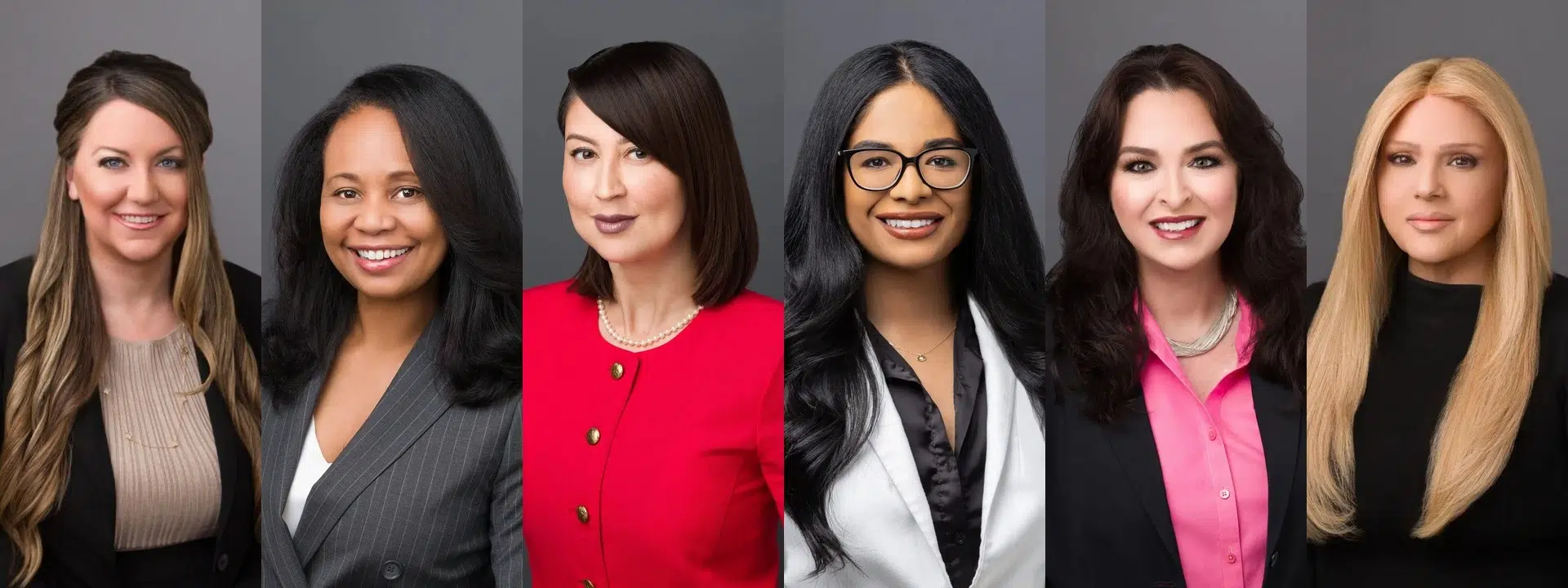
Gastelum Attorneys is a Las Vegas divorce and family law firm representing clients throughout Clark County in divorce, child custody, child support, spousal support, guardianship, and property division. Founded in 2018, the firm has eight Nevada-licensed attorneys, offices in Downtown Las Vegas and Summerlin, bilingual English and Spanish service, and more than 5,000 family law cases handled, based on firm records.
Reviewed by Jennifer Setters, J.D., Managing Attorney & Founder, Gastelum Attorneys · Nevada Bar No. 13126 · UNLV William S. Boyd School of Law · Family law exclusively since 2018
Call 702-979-1455 Same-week consultations · English & Spanish · Schedule a case evaluation
Nevada law allows no-fault divorce filing under NRS 125.010: no separation period is required, and the residency requirement is six weeks (NRS 125.020). Our divorce attorneys in Las Vegas handle contested and uncontested divorce, high-asset property division, complex custody matters, and spousal support in Clark County Family Court. In the firm’s Clark County caseload, uncontested divorces close in 2–3 weeks and contested divorces average 9–11 months. At Gastelum Attorneys, every contested matter is prepared for litigation from the first consultation.
Timeframes and fee ranges reflect firm records and typical Clark County cases; your case may differ. This page is general information, not legal advice.
4.8★ Google Rating · 480+ Reviews · Avvo 10.0 · Yelp Reviews
When evaluating Las Vegas divorce attorneys, the most important factors are court experience, practice exclusivity, trial readiness, and transparent fee communication. Here is what to verify before retaining any divorce lawyer or family law attorney in Clark County:
These are the standards Gastelum Attorneys holds itself to. Clients frequently come to us after switching from a prior attorney. We welcome consultations at any stage of a case.
Community property keeps accruing
Nevada is a community property state (NRS 123.220). Income and assets acquired during the marriage and before the divorce decree are generally treated as community property unless an exception applies.
Dissipated assets can be addressed
If a spouse drains community assets, a court can weigh that when dividing property under NRS 125.150(1)(b).
Filing can trigger protective orders
Once a case is filed, a court can set temporary orders for support, custody, and preserving assets.
Early guidance improves your leverage
Knowing your position before informal arrangements harden can help protect your options.
Talk to a Las Vegas divorce attorney: (702) 979-1455
In Nevada, divorce requires one spouse to establish six weeks of residency (NRS 125.020), after which a Complaint is filed in Clark County Family Court. Nevada is a no-fault state under NRS 125.010. Proving wrongdoing is not required: either spouse may file on the ground of incompatibility, and one spouse asserting it is enough.
The process moves through five stages: filing the Complaint, financial disclosure under NRCP 16.2, temporary orders, mediation or trial, and the final Decree of Divorce. Many Nevada divorces resolve before trial through negotiation or mediation. In the firm’s Clark County caseload, contested divorces involving spousal support typically resolve within 9–11 months; uncontested Summary Proceedings close in 2–3 weeks. Early financial disclosure and expert witness retention often influence how courts evaluate asset values.
For a full walkthrough of each step, see our complete guide to getting a divorce in Nevada →
Gastelum Attorneys is a divorce and family law firm in Las Vegas, Nevada focused on high-asset, contested, and complex family law matters. Our divorce attorneys represent clients in Clark County Family Court across contested and uncontested divorce, child support, spousal support, child custody, guardianship, and property division.
Hablamos Español: Visite nuestro sitio en español
Clientes que prefieren hablar en español pueden consultar con nuestro equipo sobre divorcio, custodia, manutención, división de bienes y otros asuntos de derecho familiar en Las Vegas.
Founded in 2018 by Jennifer Setters, the firm has eight attorneys who practice Nevada family law exclusively. We serve clients from two offices, Downtown Las Vegas and Summerlin, covering the entire Las Vegas Valley, including Henderson, North Las Vegas, Paradise, and Spring Valley.
We represent people in Las Vegas and Clark County facing contested divorce, high-asset property division, custody disputes, support matters, guardianship, and complex family law litigation, including clients who need Spanish-speaking divorce representation in Nevada.
From Summary Proceedings that close in weeks to high-conflict contested litigation involving hidden assets, narcissistic spouses, or domestic violence. Every contested case is prepared for trial from the outset; trial readiness strengthens our position in settlement negotiations.
Business valuations, stock options, retirement accounts, and complex asset structures. Comprehensive financial disclosure and expert witness retention early in the case typically produce more accurate asset valuations in high-asset divorce matters.
Multifaceted custody disputes, military pension division under USFSPA, and matters involving interstate jurisdiction. Active-duty service members have additional protections under the Servicemembers Civil Relief Act. See our military divorce lawyer page for details.
Establishment, modification, and enforcement of support orders under NAC 425.140 (child support) and NRS 125.150 (spousal support). Under Martinez v. Martinez, 140 Nev. Adv. Op. 73 (2024), transportation costs for custody exchanges must be considered as part of the overall child support determination under NAC 425.150 and cannot be ordered separately, an important consideration in cases with significant travel between households.
Community property under NRS 123.220: asset tracing, commingling disputes, and forensic accounting when assets are hidden or undervalued.
Adult and minor guardianship proceedings in Clark County.
For parenting time, joint or sole arrangements, and modification of parenting plans, visit our Las Vegas child custody lawyer page.
Downtown Las Vegas, three miles from the Family Courts and Services Center, and Summerlin, serving the west valley. Same attorneys, same-week consultations at both. Calls answered 24/7.

Main office · 3 miles from Family Courts & Services Center
718 S 8th Street
Las Vegas, NV 89101
(702) 979-1455
4.8★ Google Rating · 480+ Reviews · Calls answered 24/7
Serving Summerlin, Spring Valley & the west valley
1635 Village Center Cir, Ste. 250
Las Vegas, NV 89134
(725) 605-2736
Calls answered 24/7 · English & Spanish
Get direct answers about your case from a Nevada family law attorney, not a call center.
Estimate your potential costs with our calculators: Nevada Alimony Calculator | Nevada Child Support Calculator
By submitting this form, you agree to receive text messages from Gastelum Attorneys at the number provided. Message and data rates may apply. Message frequency may vary. Consent is not a condition of purchase. Text STOP to opt out at any time.
At Gastelum Attorneys, every contested case is built for litigation from the first consultation. Every attorney practices Nevada family law exclusively and appears regularly in Clark County courtrooms. No personal injury, criminal, or business cases. Our attorneys regularly handle matters under the local procedures used in Clark County Family Court; judicial assignments vary by case. Our eight attorneys are available for same-week consultations from our Downtown Las Vegas and Summerlin offices, serving Henderson and North Las Vegas.
Jennifer Setters and the team have handled more than 5,000 family law cases since 2018, from straightforward uncontested dissolutions to high-conflict matters involving hidden assets, narcissistic spouses, and complex property disputes across Las Vegas, Henderson, and North Las Vegas.
Yes. Full bilingual legal services are available in English and Spanish, and Gastelum Attorneys maintains a complete Spanish-language site at gastelumattorneysespanol.com. Nuance in mediations, depositions, and court testimony is best preserved by attorneys who speak the language natively, not through an interpreter.
Yes. You communicate with your attorney from the start, not a paralegal or call center. Regular updates, prompt responses by phone, in person, or online.
Gastelum Attorneys has two Las Vegas offices: our main office at 718 S 8th Street in Downtown Las Vegas, about three miles from the Family Courts and Services Center, and our Summerlin office at 1635 Village Center Cir, Ste. 250, serving the west valley. Calls are answered 24/7 at both locations. See office details and directions →
When both spouses agree on all terms (division of assets, child custody, and support), Nevada’s Summary Divorce Proceeding can finalize the dissolution in 2–3 weeks. Our attorneys prepare the full agreement and court filing to ensure nothing is overlooked.
When spouses cannot agree on property, custody, or support, the case is contested. Every contested divorce is prepared for trial from the first consultation: financial discovery, depositions, and expert witnesses. Trial readiness strengthens our position in settlement negotiations.
High-asset divorce involves business valuations, retirement accounts, stock options, and complex asset structures subject to division under NRS 125.150(1)(b). Comprehensive financial disclosure and expert witness retention early in the case typically produce more accurate valuations.
Military pension division is governed by USFSPA. Active-duty service members have additional protections under the Servicemembers Civil Relief Act. See our military divorce lawyer page for a full breakdown.
For deeper strategy guidance, see our step-by-step Nevada divorce guide.

| Case type | Estimated timeline | Estimated legal fees |
|---|---|---|
| Uncontested (Summary Proceeding) | 2–3 weeks | $2,500–$5,000 |
| Contested | 9–11 months | $10,000–$30,000+ |
| High-conflict or trial | 12–24 months | $30,000–$50,000+ |
Ranges reflect the firm’s Clark County caseload since 2018; your case may differ. See the Nevada divorce timeline guide for stage-by-stage timing, and estimate support with the alimony calculator or child support calculator.
Can I file for divorce if I just moved to Nevada?
Yes. One spouse needs six weeks of Nevada residency under NRS 125.020. File in Clark County Family Court. You do not need to have been married in Nevada.
For answers on alimony, property division, child support, and child custody in Las Vegas, visit our practice area pages. Not sure if you’re ready? Try our Am I Ready for Divorce? guide.
Nevada is a community property state: assets and debts acquired during the marriage are generally community property and are divided equally unless a signed agreement, a separate-property exception, or a compelling reason applies.
Under NRS 123.220, property acquired during the marriage is generally community property. Under NRS 125.150(1)(b), the court divides it equally to the extent practicable unless it finds a compelling reason for an unequal division and sets out that reason in writing. This includes wages, retirement contributions, real estate, business interests, and debt. Property owned before marriage or received as a gift or inheritance may qualify as separate property.
When one spouse controls the finances, formal discovery and forensic accounting can identify commingled funds, undervalued business interests, and assets not disclosed during initial proceedings. Early financial disclosure and expert witness retention often influence how courts evaluate asset values.
Nevada has no binding alimony formula; courts weigh the 11 statutory factors in NRS 125.150. Attorneys sometimes use the unofficial Tonopah Formula as an estimation or negotiation reference, but judges are not required to apply it. For a full breakdown of how income gaps and marriage length affect calculations under Kogod v. Cioffi-Kogod, visit our Nevada spousal support guide.
Gastelum Attorneys represents clients from every part of Clark County from two Las Vegas offices. Every Clark County divorce, custody, and support case is heard in the Family Division of the Eighth Judicial District Court in Las Vegas, whether you live in Henderson, Boulder City, or Mesquite, so the office you visit is a matter of convenience, not jurisdiction.
Henderson: Our Henderson divorce lawyer page covers filing, timelines, and property questions specific to Green Valley, Anthem, and the rest of Henderson.
Summerlin and the west valley: Our Summerlin family law office at 1635 Village Center Cir serves Summerlin, Spring Valley, and the west valley.
Communities we serve: Las Vegas, Henderson, North Las Vegas, Summerlin, Paradise, Spring Valley, Enterprise, Sunrise Manor, Boulder City, Mesquite, Laughlin, Moapa Valley, Searchlight, and Sandy Valley. Consultations are available in English and Spanish at either office or by phone.

Jennifer Setters, J.D., Managing Attorney & Founder, Gastelum Attorneys
Jennifer Setters is a Nevada-licensed Las Vegas divorce attorney and the founder and Managing Attorney of Gastelum Attorneys. She earned her J.D. from the UNLV William S. Boyd School of Law and holds a B.S. in Criminal Justice from UNLV. Licensed with the State Bar of Nevada (Bar No. 13126), Jennifer has represented clients in the Eighth Judicial District Court since 2018 and leads a firm that has handled more than 5,000 family law cases across Las Vegas, Henderson, and North Las Vegas. She is fluent in English and Spanish.
State Bar of Nevada (No. 13126) · UNLV William S. Boyd School of Law, J.D. · Licensed since 2018
Gastelum Attorneys focuses on high-asset, contested, and complex family law matters in Las Vegas. The firm has eight Nevada-licensed attorneys practicing family law exclusively since 2018 and represents clients in English and Spanish in Clark County Family Court, handling business valuations, retirement and stock-option division, hidden-asset discovery, and high-conflict custody.
The right divorce attorney in Las Vegas for your case depends on your situation, but the most important factors are consistent: the attorney should practice exclusively in family law, appear regularly in Clark County Family Court, prepare cases for trial from the outset (not just settlement), and communicate transparently about fees and billing. For high-asset cases, look for experience with forensic accounting and business valuation. For custody disputes, look for familiarity with Nevada’s domestic violence custody presumption under NRS 125C.0035(5) and the statutory definition of domestic violence in NRS 33.018. For Spanish-speaking clients, bilingual representation preserves nuance that interpreters can miss. Gastelum Attorneys offers a same-week case evaluation with a Nevada family law attorney, not a call center. Read what our clients say →
Gastelum Attorneys has two offices in Las Vegas: the main office at 718 S 8th Street, Las Vegas, NV 89101 in Downtown Las Vegas, about three miles from the Family Courts and Services Center, reachable at (702) 979-1455, and a Summerlin office at 1635 Village Center Cir, Ste. 250, Las Vegas, NV 89134, reachable at (725) 605-2736. Both offices serve clients throughout Clark County, calls are answered 24/7, and consultations are available in English and Spanish. See directions to both offices →
An uncontested divorce typically costs $2,500–$5,000 in total legal fees. A contested divorce with property disputes runs $10,000–$30,000 or more. High-conflict cases involving forensic accountants, depositions, and trial preparation typically run $30,000 to $50,000 or more. Most firms, including Gastelum Attorneys, charge a retainer up front applied to your bill as work is completed.
An uncontested Nevada divorce using the Summary Proceeding can be finalized in 2–3 weeks once paperwork is correctly filed. A contested divorce in Clark County typically takes 9–11 months based on our firm’s caseload. High-conflict divorces involving hidden assets, business valuations, or custody disputes can run 12–24 months. The biggest variable is whether both parties are willing to negotiate. For a full breakdown by case type, see our Nevada divorce timeline guide.
No. Nevada is a no-fault divorce state under NRS 125.010; no separation period is required before filing. The core jurisdictional requirement is that one spouse must have lived in Nevada for at least six continuous weeks (NRS 125.020); other filing and procedural requirements still apply. You can file in Clark County’s Eighth Judicial District Court even if you were married in another state.
Nevada is a community property state; both spouses generally have an equal interest in community property acquired during the marriage, regardless of whose name it is in or who earned the income. This includes the family home, retirement accounts, business interests, vehicles, and debt. Separate property, owned before marriage or received as a gift or inheritance, generally stays with its original owner. For a full breakdown, see our guide on property division in Nevada.
Yes. Nevada does not require both spouses to sign divorce papers. If your spouse refuses to respond after being properly served, the court can grant a default divorce. If they contest proceedings but refuse to cooperate, the case proceeds to trial and the judge issues a ruling. A non-signing spouse cannot permanently block a divorce in Nevada. See: Can you get a divorce without the other person signing?
Nevada decides custody under the best interest of the child standard in NRS 125C.0035, weighing each parent’s relationship with the child, stability, co-parenting ability, and any history of domestic violence (a finding of domestic violence by clear and convincing evidence after an evidentiary hearing creates a rebuttable presumption against custody for the perpetrator under NRS 125C.0035(5)). Because custody is fact-specific, our child custody lawyer in Las Vegas page covers how Clark County judges apply each factor in full.
A legal separation in Nevada (NRS 125.190) allows spouses to live apart and divide assets, debts, and custody, but remain legally married. Divorce terminates the marriage entirely. Couples choose legal separation for religious reasons, to preserve insurance benefits, or to maintain military spousal benefits that require a certain marriage length. Legal separation can be converted to divorce later. Both proceedings use the same Clark County Family Court process and require the same financial disclosures. See our full guide to Nevada legal separation.
Yes. Nevada courts can award spousal support under NRS 125.150 when there is a significant disparity in earning capacity. Nevada does not guarantee alimony. Judges weigh 11 statutory factors including marriage length, income, employability, household contributions, and standard of living. Attorneys sometimes use the unofficial Tonopah Formula as an estimation or negotiation reference, but judges are not required to apply it, and outcomes vary by judge and case facts. Use our Nevada alimony calculator or visit our spousal support Las Vegas page for a full breakdown.
Partly. Nevada protects certain sensitive family court records, but divorce proceedings are not automatically private, and the framework changed on October 1, 2025. Under SB 432, Nevada family court proceedings are now presumptively open, replacing the prior automatic-closure rules. A judge may seal a record or close part of a hearing only on a showing that a compelling interest, such as a child’s best interests or a party’s privacy, outweighs public access. Sensitive materials like financial disclosure forms, custody evaluations, and medical or psychological reports are generally not part of the public record without a court order, and willfully posting another person’s protected personal identifying information can be charged as a category D felony. Our Nevada family court privacy guide explains how this works, and our Las Vegas family law attorneys can advise on protecting sensitive information in your filings.
Many clients find our guides on miserable husband syndrome and walkaway wife syndrome helpful when researching their situation before speaking with a Las Vegas divorce attorney. When you’re ready, our team is available for same-week case evaluations. Call (702) 979-1455.
Two Offices: Downtown Las Vegas & Summerlin · Serving Henderson · North Las Vegas · Paradise · Spring Valley · All of Clark County
Please feel free to leave a review:



Visited our Summerlin office? Leave a Google review for our Summerlin location →



New Beginnings, Brighter Tomorrows
Last updated: October 2026. Includes SB 432 (Oct. 2025), Martinez v. Martinez (2024)